
Dentium Successfully Concludes “Diverse in Easy Bone Graft” Seminar
Presenting Practical Clinical Solutions for Simple yet Predictable Bone Grafting
From Fundamental Principles to Complex Case Management, Sharing Real-World Strategies for Bone and Soft Tissue Regeneration
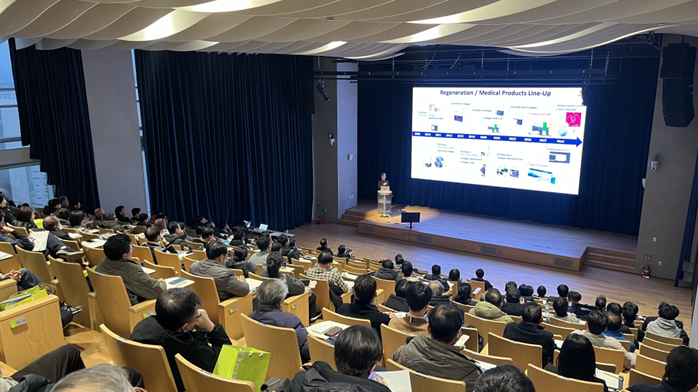
Bone grafting and soft tissue management remain critical factors determining the success of implant therapy across a wide range of clinical situations. Addressing these ongoing challenges, Dentium hosted the “Diverse in Easy Bone Graft” Seminar on January 10, 2026, bringing together more than 100 dental clinicians.
The seminar was designed to present “Easy but Predictable Bone Grafting” as a clinically achievable concept, guiding participants through a structured flow—from fundamental principles to advanced management of complex cases. The program focused on three core pillars: Easy Bone Graft, Soft Tissue Management, and Overcoming Complex Cases, sharing strategies that can be directly applied in daily clinical practice.
Core Principles of GBR: Space Maintenance and Wound Stability
In the opening session, Prof. Young-Woo Song (Veterans Health Service Medical Center) emphasized space maintenance and wound stability as the key determinants of graft position security and GBR prognosis. He explained that in non-contained defects, stable fixation of barrier membranes is essential, and that the use of bone tacks or holding sutures plays a critical role in improving clinical outcomes.
He also noted that while collagenated soft-type block grafts can simplify surgical procedures, excessive compression may negatively affect ossification—highlighting the importance of balancing simplicity with biological principles.
Understanding Graft Materials: “When and How” Matters Most
Dr. Kang-Hee Lee (Yonsei Geomdan Dental Clinic) followed with a comparative lecture on the biological mechanisms and clinical characteristics of xenogeneic (bovine) and synthetic (HA & TCP) bone graft materials. He emphasized that clinical outcomes depend not merely on material selection, but on when and how each material is used.
By comparing collagen-containing xenografts and synthetic grafts, Dr. Lee demonstrated—through clinical cases—the importance of understanding graft material properties in relation to defect morphology and surgical objectives.
Defining the “Easy Bone Graft” Concept
Dr. Sung-Min Jung (Dentium Dental Clinic) shared Dentium’s strategic direction in bone graft solutions, proposing the “Easy Bone Graft” concept as an evolution beyond conventional bone grafting techniques. He emphasized approaches that enable clinicians to perform grafting procedures more easily, efficiently, and safely, supported by diverse clinical cases.
Dr. Jung also introduced clinical strategies utilizing tissue regeneration materials such as PDRN, PN, and PH, drawing attention to their role in enhancing regenerative outcomes within simplified workflows.
Soft Tissue Management: A Foundation for Long-Term Stability
The Soft Tissue Management session focused on the role of soft tissue in supporting successful bone regeneration.
Prof. Dong-Woon Lee (Wonkwang University Dental Hospital) presented strong scientific evidence linking vertical soft tissue thickness to early bone loss, emphasizing that peri-implant soft tissue thickness—particularly in the coronal region—has a decisive impact on long-term bone stability.
His lecture encouraged clinicians to move beyond a bone-volume-centered approach and adopt strategies that manage both soft tissue quality and thickness to achieve stable outcomes.
Dr. Kyung-Man Min (Seoul May Dental Clinic) introduced implantoplasty-centered surgical strategies for the treatment of peri-implantitis. He presented step-by-step soft tissue management protocols at different treatment stages and proposed a realistic approach combining implantoplasty with GBR after decontamination of infected implant surfaces—offering practical solutions applicable in daily practice.
Managing Complex Cases: Predictability Through Structured Strategies
In the Complex Case session, Prof. Sang-Jun Yoo (Chosun University Dental Hospital) categorized GBR-related exposures and infections by stage, presenting systematic strategies for complication management. He emphasized that in high-risk patients, staged approaches often provide greater stability than aggressive simultaneous procedures.
Following this, Dr. Seung-Keun Lee (Gongneung Seoul Dental Clinic) introduced vertical and horizontal augmentation techniques using GBR plates and screws. He shared practical insights into optimal plate positioning, tips for preventing early exposure, and methods for densely packing particulate bone grafts without voids by leveraging the structural characteristics of the plates—drawing strong interest from attendees for their reproducibility and clinical reliability.
Redefining “Easy” as Predictability and Stability
The “Diverse in Easy Bone Graft” Seminar was widely recognized for organizing complex bone grafting procedures into predictable and stable clinical strategies. Importantly, the seminar redefined “Easy” not as mere procedural simplification, but as a strategic concept aimed at improving predictability and long-term stability of clinical outcomes.
Dentium will continue to develop educational programs that organically connect materials, surgical techniques, and clinical judgment, reinforcing its role as a trusted partner in establishing reliable treatment standards that clinicians can confidently apply in daily practice.